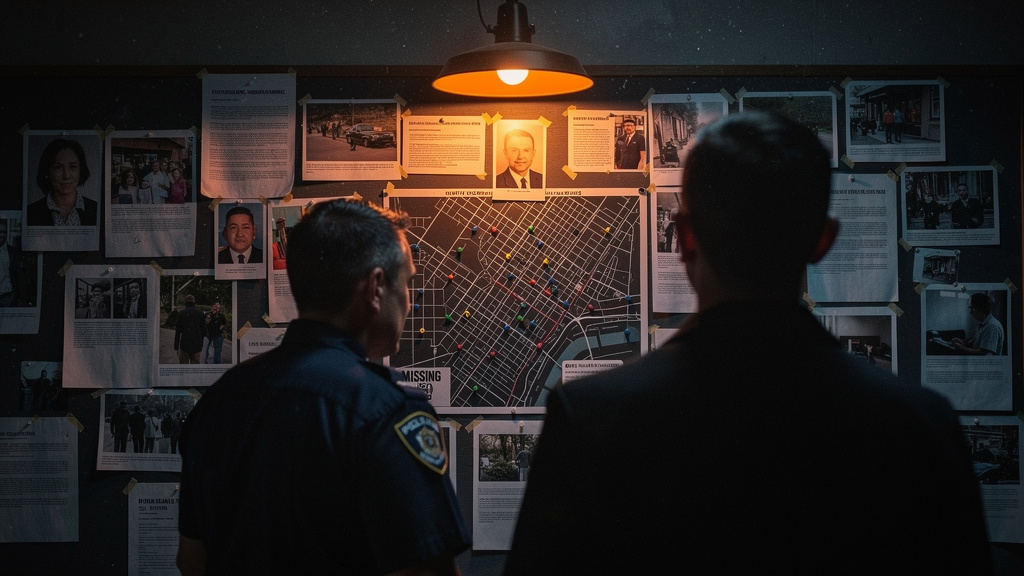
There is a myth — built mostly by movies — that private investigators and police departments work against each other. In missing-persons cases, the reality is the opposite. The best outcomes come when both sides share information, divide the workload, and stay coordinated. Families who understand how that collaboration works can move their case forward faster.
What only law enforcement can do
There are tools that belong exclusively to police, and any private investigator working a missing-persons case has to respect that line.
Only law enforcement can:
- Subpoena phone, financial, and digital records
- Obtain search warrants
- Access national databases like NCIC, NLETS, and state DMV records
- Issue AMBER, Silver, or Endangered Missing Person alerts
- Make arrests
If your case requires those tools, it has to go through law enforcement. A reputable PI will tell you that directly.
What private investigators bring to the table
Police departments are often stretched thin. A single missing-persons unit may carry dozens of open cases at once, and active leads compete with administrative load. That's where a private investigator can make a measurable difference. PIs can offer:
- Dedicated focus on one case. A family hires us to work their case — not fifty.
- Specialized SAR resources. Thermal-imaging drones, K-9 teams, and trained ground searchers, deployable on short notice.
- Civilian-style interviewing. People sometimes open up to a private investigator in ways they won't to a uniformed officer.
- Cross-jurisdictional continuity. When a case crosses county or state lines, a PI keeps the investigation continuous while agencies
- Time and persistence. Active cases go cold. We don't.
How the two sides collaborate in practice
Good collaboration looks like:
- The PI shares all evidence and leads with the assigned detective — promptly and in writing.
- The detective shares what they can about the case status and what gaps the PI can help fill.
- The two coordinate on outreach — who is interviewing whom, what gets posted publicly, what stays held back.
- Neither duplicates work. If law enforcement is running phone records, the PI focuses on field work, witness interviews, and SAR.
Done well, this means a case has two teams pulling in the same direction with different toolsets.
What families should do
If you're working with both law enforcement and a private investigator:
- Be transparent with both. Don't withhold from one to protect the other.
- Don't pit them against each other. It slows everything down.
- Centralize communication. Designate one family member to coordinate with both teams.
- Document everything. Keep a running timeline of what each side has said and done.
Trust is the operating currency of an investigation. The more open the communication between investigators, law enforcement, and the family, the faster leads turn into action.
If your family is navigating a missing-persons case and you're not sure how a private investigator fits alongside law enforcement, call us at 877-619-9890. SEARCH Investigations works alongside agencies across the country, and we can help you understand what role we can play in your specific situation.